


Opening product…

DocPenny
PDF Generation API for Developers
 Visit site
Opening product…
PDF Generation API for Developers
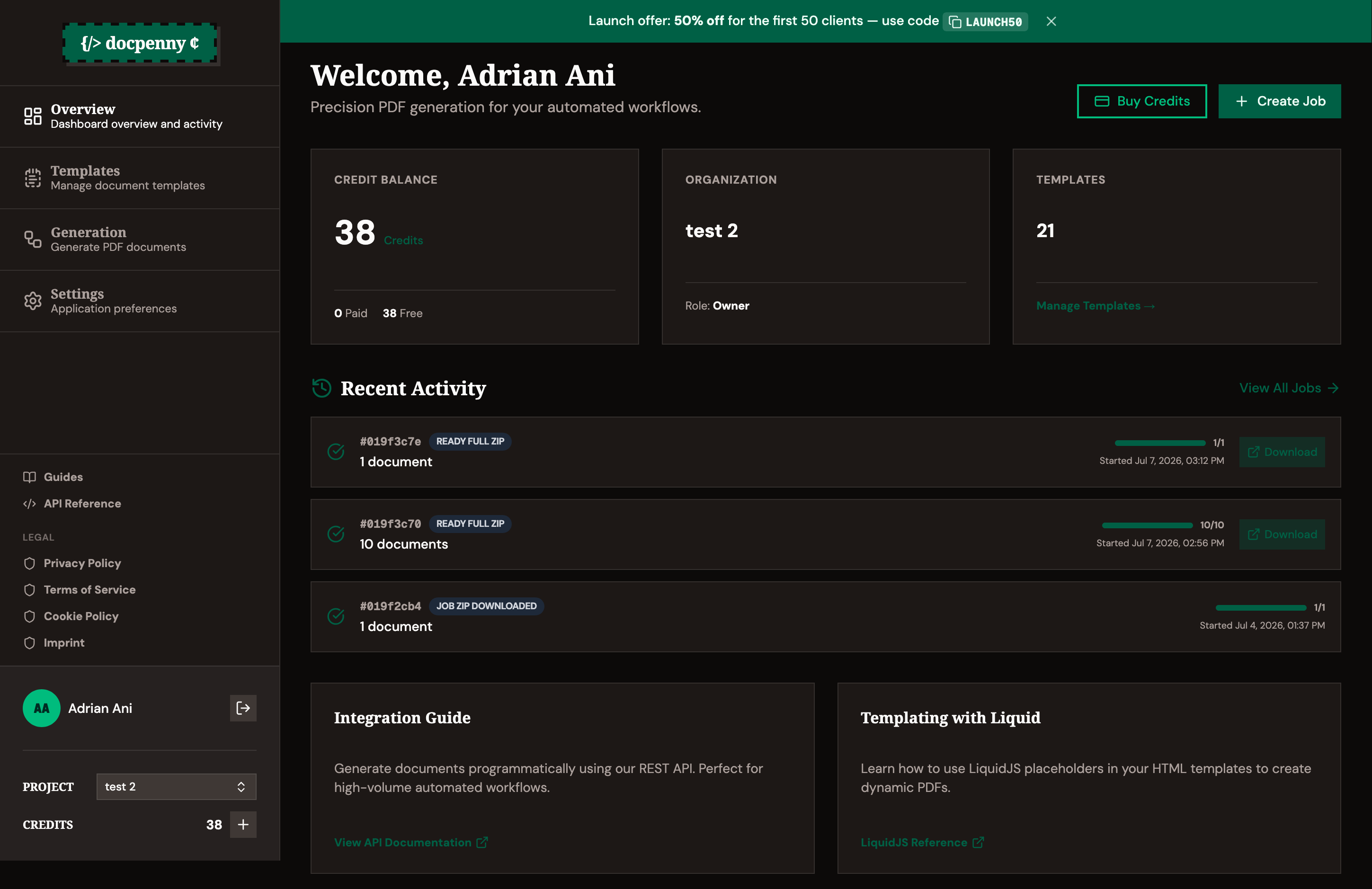
I built Docpenny because I am a developer, and I wanted to make a tool I would genuinely find useful. I was interested in the practical problem of turning HTML templates and structured data into PDFs, so I started with a simple approach: HTML, LiquidJS, JSON, and Chrome orchestration. I want to reach other developers who need to generate PDFs without building and maintaining that rendering infrastructure themselves. I am still figuring out how broad the use cases should be, so the project is intentionally focused for now. The main thing I want to improve is letting clients render templates hosted on their own domains. Ideally, they could use their preferred language and keep their data on their own server, sending Docpenny a URL and, when needed, authenticated headers. Docpenny would render the page and return a PDF. I am also considering bring-your-own S3, so clients retain more complete control of their data while Docpenny handles the Chrome orchestration. These are directions I am exploring, not finished features.
The idea of a PDF generation tool for developers is very smart. Yes, if you search up the web you will probably be getting hundreds of PDF tools, but none of them look or feel this clean, and the main purpose of DocPenny is that it is a very focused tool that lets you export from specific types, like HTML or JSON formats from sites, has a lot of template examples and even API integration. The only downside is that it has this trending form of subscription by credits, but for the amount of tokens that you receive even in a free plan, it seems worth it.
Unlike subscription-based services with expiring credits, docpenny uses a pay-per-document model where purchased credits never expire. You only pay for what you actually use.
Every account receives 50 free credits each month (approximately 250 MB of rendered PDF output). This allowance refreshes monthly and is always free, no credit card required. Use it for testing, small projects, or as a permanent free tier.
Yes. All data is encrypted at rest, and we automatically purge all input data within 24-72 hours of job completion. We process your data. We do not warehouse it.
docpenny supports raw HTML and CSS for full control over your document layout, plus the Liquid template engine for dynamic data binding. You can use any combination of HTML, CSS, and Liquid in your templates.
Yes. Every account includes 20 production-ready starter templates: invoice, quote, receipt, statement, contract, NDA, payslip, certificate, and more. Generate them directly with your data, or copy the HTML and customize.
No. Unlike other services, docpenny credits have no expiration date. Whether you use them today or in three years, they remain in your account until consumed.
Yes. docpenny ships a native MCP (Model Context Protocol) server that integrates with Claude Code, Cursor, Cline, VS Code, Windsurf, Continue, Zed, OpenCode, Hermes Agent, and omp.sh. Configure it in one minute. See the MCP setup guide for your editor.


 Discussion
1 commentI know there are a lot of PDF tools out there, but we really needed one for devs, also UI looks hella clean!